
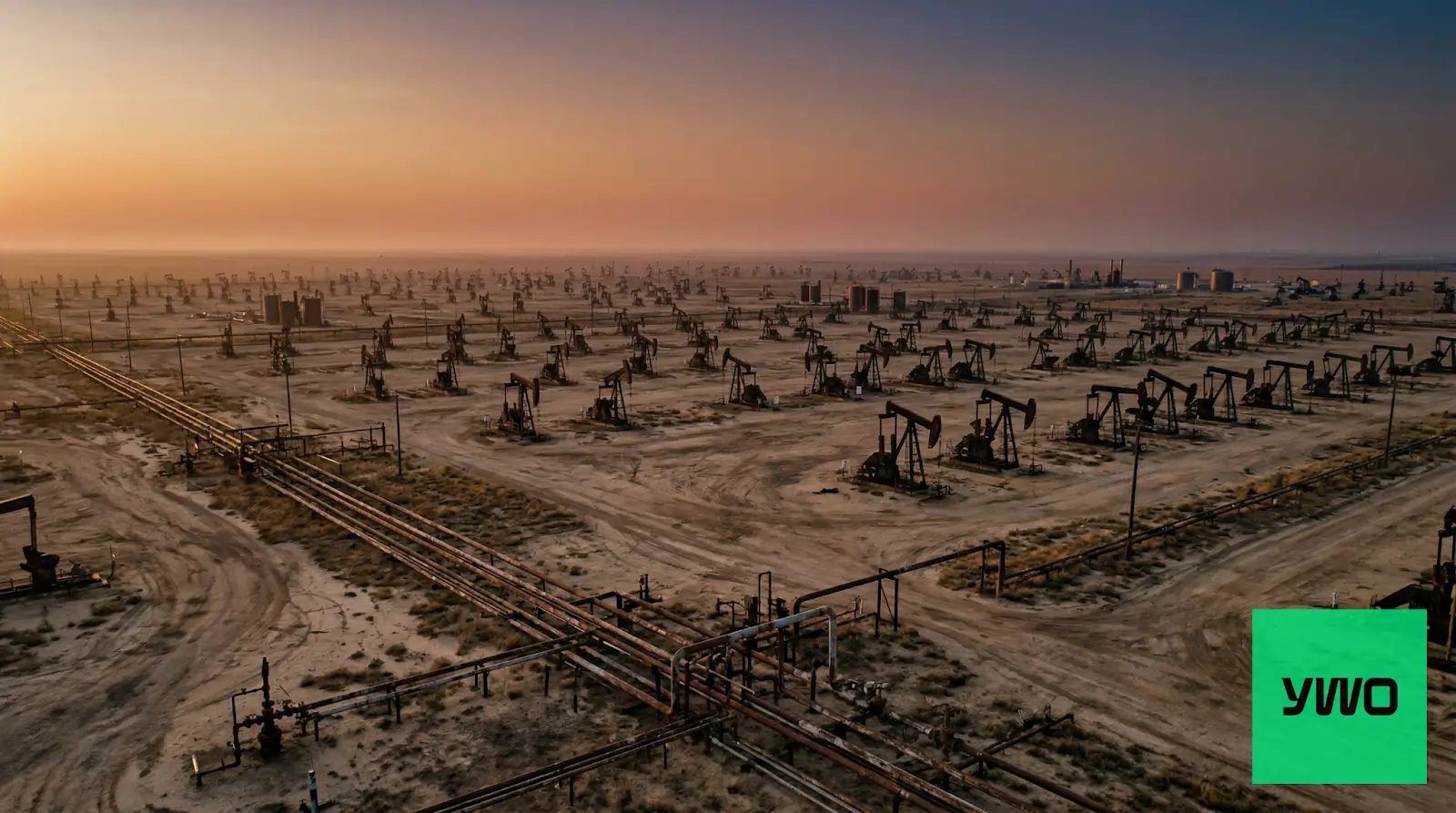
Oil prices declined during early Tuesday trading after signals emerged that the United States and Iran may resume diplomatic negotiations,introducing the possibility of reduced geopolitical risk in a region critical to global energy supply. WTI crude (CL=F) and Brent crude (BZ=F) both traded lower as market participants reassessed the geopolitical risk premium that had been embedded in energy prices, according to CNBC reporting at 08:11 UTC.
Context
President Donald Trump signalled renewed willingness to engage Iran in peace talks, fuelling optimism that longstanding tensions — which have periodically disrupted shipping through the Strait of Hormuz — could ease, as reported by CNBC. The Strait of Hormuz remains one of the world’s most strategically sensitive energy chokepoints, with approximately 20% of global oil supply transiting the waterway, according to EIA data.
Market participants have historically priced a geopolitical risk premium into crude when tensions in the Middle East escalate. Diplomacy that may reduce that risk tends to exert downward pressure on oil prices, though analysts note that market relationships are dynamic and may change over time depending on broader supply and demand fundamentals.
The prospect of a diplomatic breakthrough also lifted broader risk sentiment globally. Equity index futures edged higher, and safe-haven assets including gold and the US dollar saw modest pressure, suggesting markets may be interpreting the development as a reduction in near-term geopolitical uncertainty.
However, analysts caution that early-stage diplomatic signals do not guarantee lasting policy shifts. Previous rounds of US-Iran engagement have at times stalled, and any durable impact on Iranian oil supply — including the potential easing of sanctions — would likely require sustained negotiations, according to Reuters.
The bear case for lower oil prices centres on the possibility that diplomatic progress could eventually unlock additional Iranian crude supply into global markets, weighing on prices over a longer horizon. The bull case holds that talks may falter, geopolitical risk could re-escalate, and that OPEC+ supply management may provide a floor for prices regardless of diplomatic developments.
Key Data
- WTI Crude (CL=F): Trading lower in early Tuesday sessions following the diplomatic headlines, according to CNBC
- Brent Crude (BZ=F): Also under pressure in tandem with WTI, reflecting broadly changes in sentiment across energy markets, per CNBC
- The Strait of Hormuz accounts for roughly one-fifth of global oil flows, according to the U.S. Energy Information Administration
- WTI has traded around $78–$80 range in recent months, though past price behaviour does not indicate future outcomes, per TradingView
- Brent has historically traded at a $3–$5 premium to WTI, a spread that may fluctuate based on regional supply dynamics, according to Reuters
Market Snapshot
| Asset | Approximate Level | Direction | Source |
|---|---|---|---|
| WTI Crude (CL=F) | Under pressure | ↓ Declining | CNBC |
| Brent Crude (BZ=F) | Under pressure | ↓ Declining | CNBC |
| S&P 500 Futures | Modest gains | ↑ Risk-on | Reuters |
| Gold (XAU/USD) | Modest pullback | ↓ Safe-haven easing | Reuters |
| USD Index (DXY) | Mixed | → Consolidating | MarketWatch |
| US 10Y Treasury Yield | Slightly firmer | ↑ Risk appetite | Reuters |
| EUR/USD | Modest gains | ↑ Risk-on sentiment | FXStreet |
Note: Levels are directional observations based on early session moves. Market relationships are dynamic and may change over time. Past correlations do not guarantee future performance. Readers are encouraged to verify current levels via live data sources.
Events Ahead
Traders and analysts may be monitoring the following upcoming catalysts, which could influence crude and broader energy market pricing:
- US EIA Weekly Petroleum Status Report — Weekly crude and distillate inventory data that may provide near-term directional context for WTI pricing; calendar available at EIA
- Iran-US diplomatic developments — Any further statements from Washington or Tehran regarding the status of negotiations could affect the geopolitical risk premium embedded in crude; monitor via Reuters Markets
- Federal Reserve communications — Upcoming Fed speakers may offer guidance on US interest rate trajectory, which has historically influenced dollar strength and commodity pricing; schedule available at Federal Reserve
- OPEC+ supply policy updates — Any signals from member states regarding production levels may interact with geopolitical developments to influence price direction; via Reuters
- US economic data releases — Inflation and growth indicators scheduled this week could affect broader risk appetite; full calendar at Investing.com
Risk Disclaimer: Trading CFDs involves substantial risk and may result in the loss of your invested capital. CFDs are complex instruments and come with a high risk of losing money rapidly due to leverage. You should consider whether you understand how CFDs work and whether you can afford to take the high risk of losing your money. Past performance is not indicative of future results. This content is for informational and educational purposes only and does not constitute investment advice.